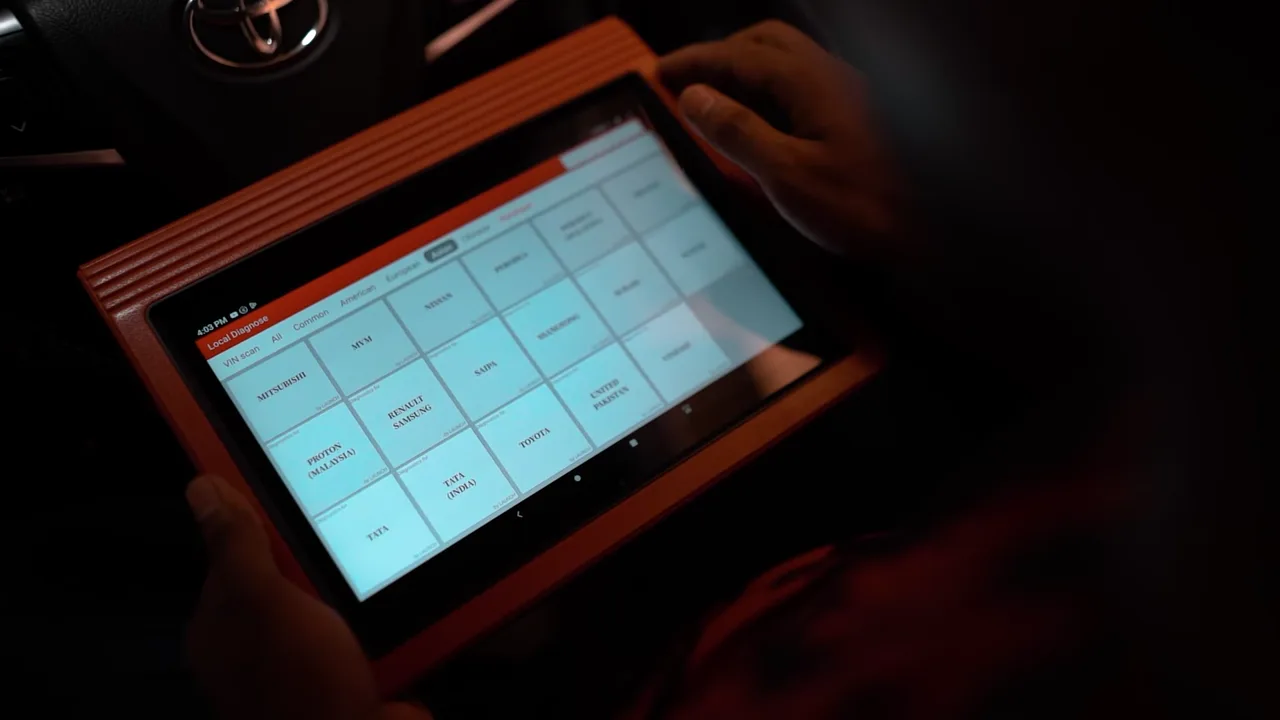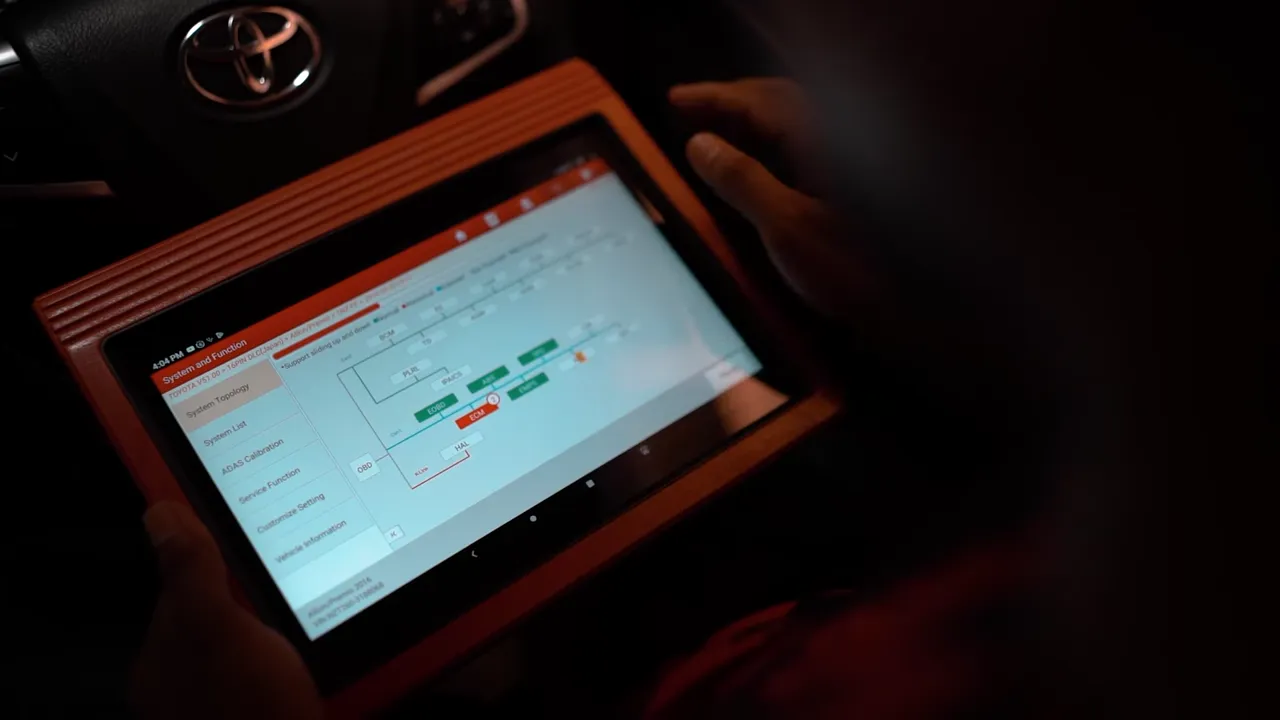
Modern vehicles coordinate engine, transmission, braking, safety, body, steering, climate, and hybrid systems through electronic control modules. Computerized diagnosis makes their stored faults and operating data visible, helping the technician test the correct system instead of guessing.
Scanning is most valuable when it is combined with the customer complaint, freeze-frame information, live data, service procedures, electrical testing, mechanical checks, and verification after repair. A scan tool does not replace diagnosis; it makes diagnosis more precise.
When computerized diagnosis is useful
- Check-engine, ABS, SRS, EPB, transmission, steering, or hybrid warning
- Intermittent starting, stalling, hesitation, or reduced-power operation
- Sensor, communication, calibration, or relearning concerns
- A fault that returned after parts replacement
- Work involving modules, throttle systems, steering angle, brakes, CVT, DCT, or hybrid controls
What the diagnostic system can reveal
A capable scan can retrieve codes from multiple modules, record the conditions present when a fault set, display live sensor and command data, operate selected components for testing, and access service functions. The useful information depends on the vehicle, module, equipment, and software coverage.
The technician still needs to decide whether the data is plausible and how it relates to the symptom. A value can be wrong because of the sensor, wiring, power supply, mechanical system, another control input, or even the way the test is performed.
Calibration and relearning are not universal resets
Some repairs require a relearn, zero-point setting, bleeding sequence, steering-angle setup, throttle adaptation, transmission procedure, or hybrid service function. These operations should follow the correct vehicle procedure and be performed only after the underlying fault and mechanical condition are understood.
Using a reset to hide a warning does not repair the cause. A successful procedure should be followed by code review, live-data confirmation, and an appropriate road or function test.
- Preserve codes and freeze-frame data
- Scan the modules related to the complaint
- Compare live data with actual operating condition
- Perform targeted electrical or mechanical tests
- Verify the repair and confirm the warning does not return
Why system-level diagnosis saves parts
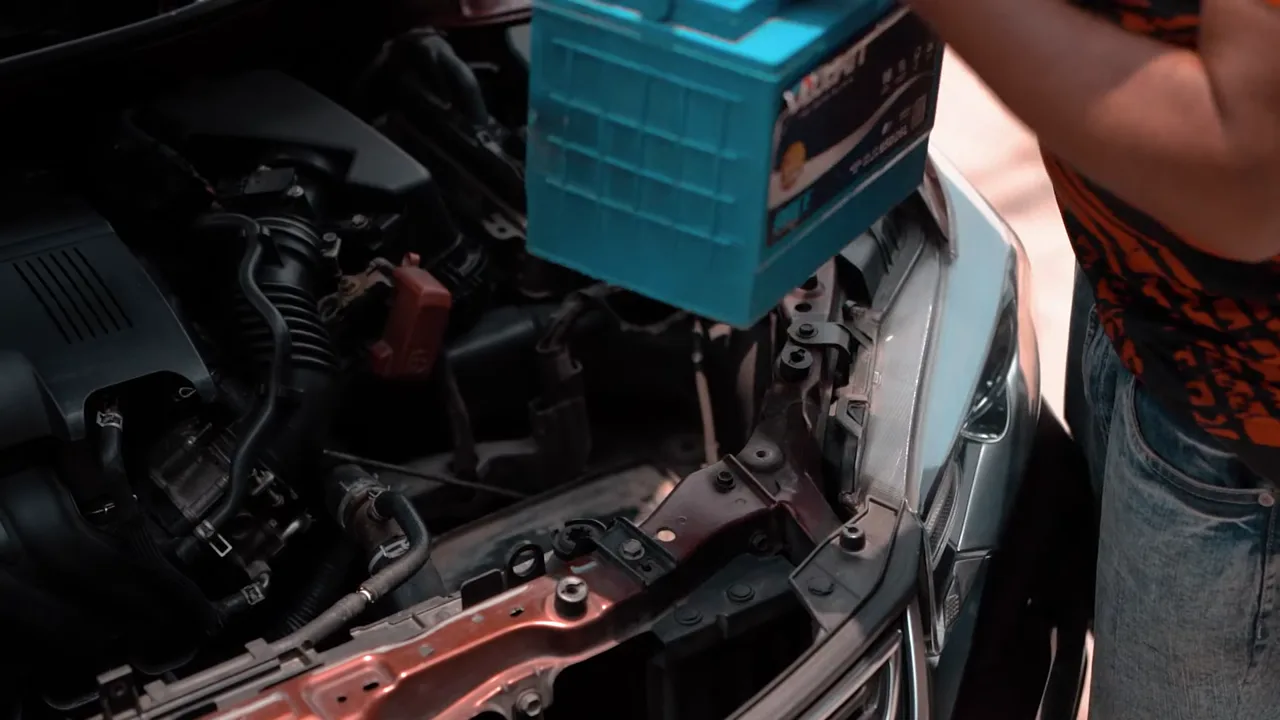
Vehicle systems share information. An engine fault can influence transmission behavior; a weak 12-volt supply can create multiple communication codes; wheel-speed data can affect ABS, stability, steering, and hybrid operation.
System-level diagnosis identifies primary and secondary faults. That reduces unnecessary replacement and helps sequence the repair correctly.
When to request workshop inspection
- Multiple warning lights appear together
- A warning returns after parts replacement or code clearing
- The vehicle requires calibration after repair
- The fault is intermittent or involves several systems
Codes and live data are evidence, not an automatic verdict. The correct repair should follow confirmed testing, suitable procedures, and post-repair verification.